call today
021- 88871689

Tag Archives: SWRO INDONESIA,SW,RO,Indonesia

SWRO (sea water reverse osmosis)


Sistem Reverse Osmosis RO Air Laut ( SWRO)
Sistem Reverse Osmosis Air Laut menjadi lebih populer. Di wilayah dimana kelangkaan air bersih merupakan tantangan yang besar, solusi inovatif sangat penting untuk memenuhi permintaan air bersih yang terus meningkat. Sistem Reverse Osmosis Air Laut (SWRO)WATTECH menawarkan pendekatan mutakhir dan andal untuk desalinasi air laut, menyediakan sumber air tawar yang berkelanjutan dan berlimpah. Dengan komitmen terhadap teknologi canggih, efisiensi, dan kinerja luar biasa, WATEECH menetapkan standar baru dalam desalinasi air laut.

Dirancang dengan presisi dan dibangun berdasarkan keahlian bertahun-tahun, Sistem Reverse Osmosis Air Laut Wattech menggabungkan kekuatan teknologi reverse osmosis dengan rekayasa yang kuat untuk mengatasi kompleksitas desalinasi. Sistem ini mengatasi karakteristik unik air laut, secara efektif menghilangkan garam terlarut, mineral, dan kotoran sekaligus memastikan keluaran air tawar berkualitas tinggi.

Kami melayani Pesanan SWRO Dari Kapasitas Kecil Sampai Kapasitas Besar, Kami selaulu Redy stok

Untuk Komponen SWRO Pesanan Anda akan Kami Layani dengan Cepat .Tanpa menunggu Import

Yang Memakan Waktu Lama

Apa itu Sistem Reverse Osmosis Air Laut SWRO?
Sistem seawater reverse osmosis RO AIR LAUT (SWRO) adalah proses pengolahan air yang menggunakan teknologi reverse osmosis untuk desalinasi RO air laut. Dan membuatnya cocok untuk berbagai aplikasi, termasuk penyediaan air minum, irigasi, dan proses industri. Sedangkan reverse osmosis adalah metode menghilangkan garam terlarut, mineral, dan kotoran lainnya dari air dengan memberikan tekanan untuk memaksa air melewati membran semi permeabel.

Seawater Reverse Osmosis Systems ( SWRO)

Apa itu sistem pembuat air reverse osmosis desalinasi air laut komersial?
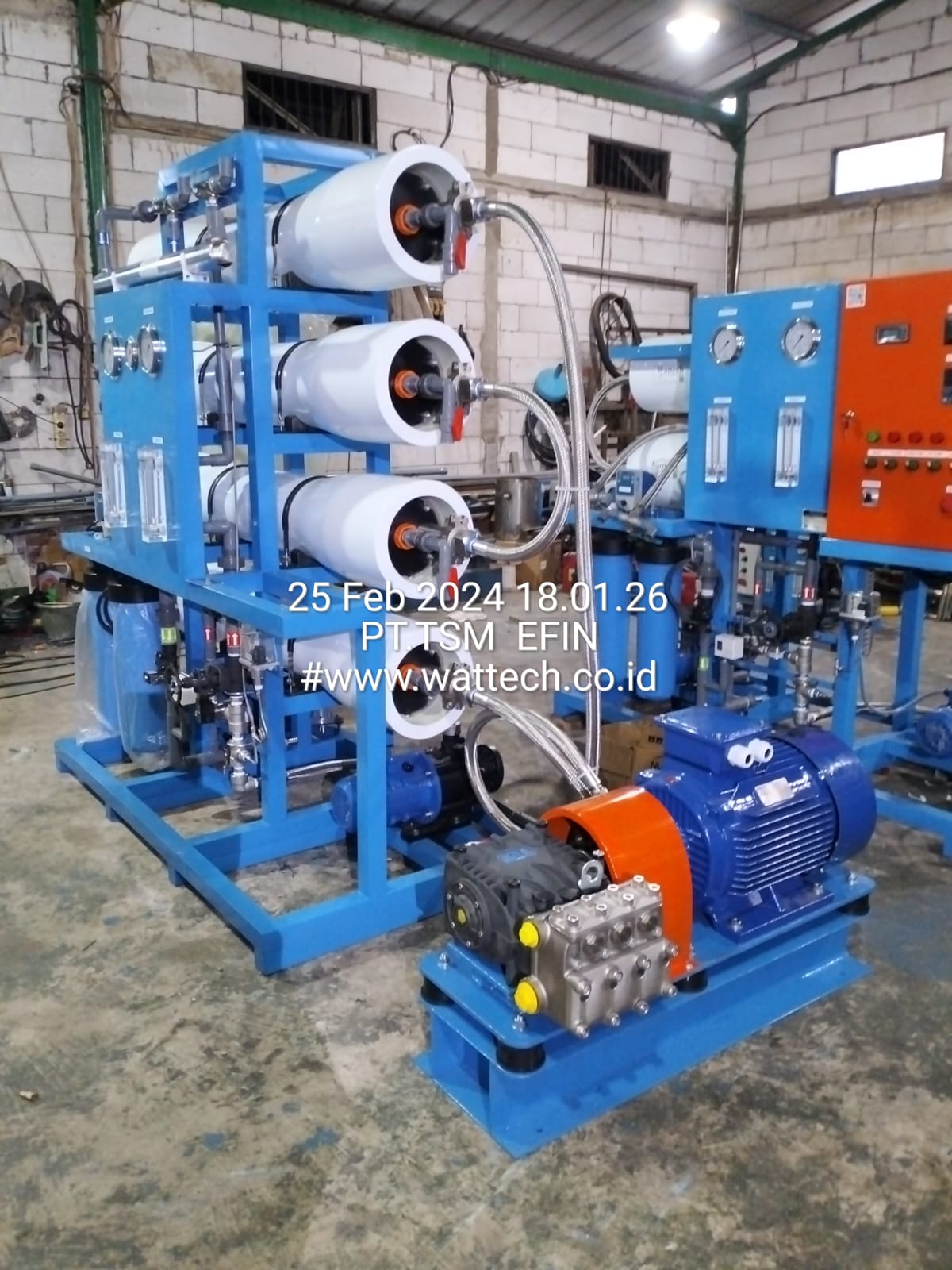
Oleh karena itu, Sistem Desalinasi Reverse Osmosis Air Laut menampilkan desain kompak yang unik dan inovatif. Karena itu memungkinkan pemasangan yang mudah dan pengoperasian di area ukuran apa pun. Fitur rangka berlapis epoksi atau baja tahan karat tingkat tinggi yang tahan korosi. Jadi desain modular yang memungkinkan sistem dibagi menjadi beberapa rakitan untuk memudahkan pemasangan. Sementara itu, seri Wattech WRO juga memiliki pompa tekanan tinggi tipe sentrifugal SS dupleks untuk kinerja tinggi dan ketahanan terhadap korosi, pengontrol PLC komputer yang dapat diprogram dengan banyak fitur bawaan, rumah membran fiberglass 1000 psi untuk ketahanan dan membran air laut berkualitas tinggi untuk air murni. air produk.

Bagaimana cara menyesuaikan/mengubah ukuran sistem reverse osmosis desalinasi air laut SWRO komersial?

Sistem pembuat air ro air laut seri WATTECH – SWRO Komersial kami tersedia dengan kapasitas mulai dari 100lph hingga 2000 lph dan TDS air umpan maksimum 45.000 ppm. Kami memproduksi Seri SWRO komersial standarmesin pembuat air Seri SWRO komersial serta dapat disesuaikan untuk memenuhi kebutuhan aplikasi air Anda. Baik untuk kapal pesiar mewah, kapal pesiar, kapal komersial, atau resor bintang lima di pantai, WATTECH memiliki sistem desalinasi yang tepat untuk proyek Anda menghilangkan garam dan mendapatkan air minum yang enak.

Dapatkah sistem osmosis terbalik SWRO komersial dipasang di kapal?
Memproduksi air bersih merupakan hal yang lumrah di banyak wilayah, misalnya di daerah perkotaan di negara-negara maju. Namun, lokasi tersebut tidak memberikan kemudahan bagi masyarakat untuk mendapatkan pasokan air tawar dalam jumlah yang cukup untuk diminum dan digunakan untuk keperluan lain. Misalnya, daerah kering yang curah hujannya sangat sedikit dan pulau-pulau terpencil di seluruh dunia hanya menyediakan sedikit sumber air bagi masyarakat yang mendiami wilayah tersebut. Salah satu penerapan yang hanya bergantung pada penggunaan pembuat air laut untuk produksi air tawar adalah instalasi lepas pantai. Ketika kapal-kapal berlayar semakin jauh ke lepas pantai dan menjauhi sarana produksi air tawar dari sumber alami seperti sungai, danau, mata air, dan sumur, satu-satunya peluang nyata untuk mendapatkan air bersih adalah dari laut itu sendiri.

Bagaimana cara kerja pembuat air laut SWRO komersial?
Meskipun lautan menyediakan air dalam jumlah besar untuk perahu-perahu air, lautan mengandung kadar garam yang sangat tinggi, sehingga tidak dapat digunakan untuk keperluan apa pun, termasuk konsumsi dan minuman. Untuk mengatasi masalah ini, pemilik kapal yang ingin menghabiskan banyak waktu di lepas pantai, pastikan untuk membawa alat pembuat air laut untuk mengubah air laut menjadi air tawar yang dimurnikan. Jadi, air yang dihasilkan dari mesin pembuat air laut mempunyai kualitas terbaik dan dapat digunakan untuk minum, mencuci, mandi, membersihkan dll.

Proses sistem SWRO komersial?
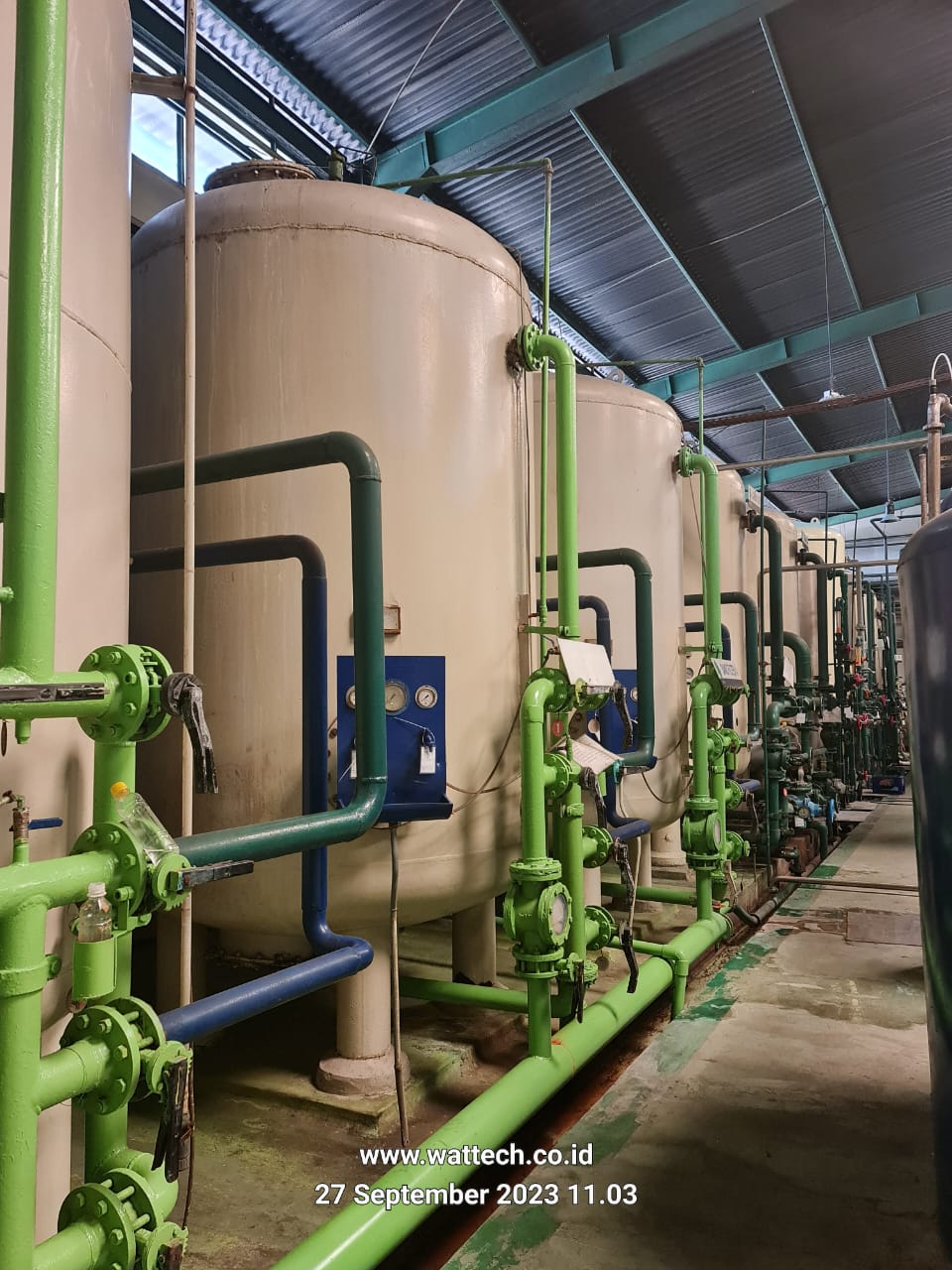
Utamanya, pembuat air perahu menggunakan teknologi sistem pengolahan air reverse osmosis. Air laut terlebih dahulu melewati unit pretreatment, yang meliputi tangki filter media, takaran bahan kimia, rumah filter kartrid. Kedua, air yang diolah sebelumnya melewati membran air laut dan memblokir garam, bakteri, dan virus, setelah proses membran Anda mendapatkan air segar

Berapa harga atau biaya sistem swro desalinasi air laut?
Jadi, biaya mesin reverse osmosis air laut swro komersial sangat bergantung pada kualitas air umpan dan kualitas air produk yang dibutuhkan.

Daftar berikut merinci banyak komponen umum sebelum dan sesudah perawatan: Untuk SWRO

Dosis kimia dan pH
Dosis klorinasi
Filter media misalnya pasir kuarsa
Filter karbon misalnya karbon aktif
Pelembut air
Dosis antiscalant
Dosis antofuling
Pengontrol tingkat lanjut misalnya Siemens
Instrumen tingkat lanjut
Filter penghilangan besi misalnya pasir lepas
TDS, pH, pemantauan Konduktivitas
Skid atau bingkai Stainless Steel
Sistem pencampuran
Sistem kelistrikan tiga fasa dan aksesorisnya
Komponen PLC misalnya Mitsubishi
UV Sterilizer sama halnya dengan generator ozon
Selanjutnya sistem pembersihan membran CIP (clean in place).

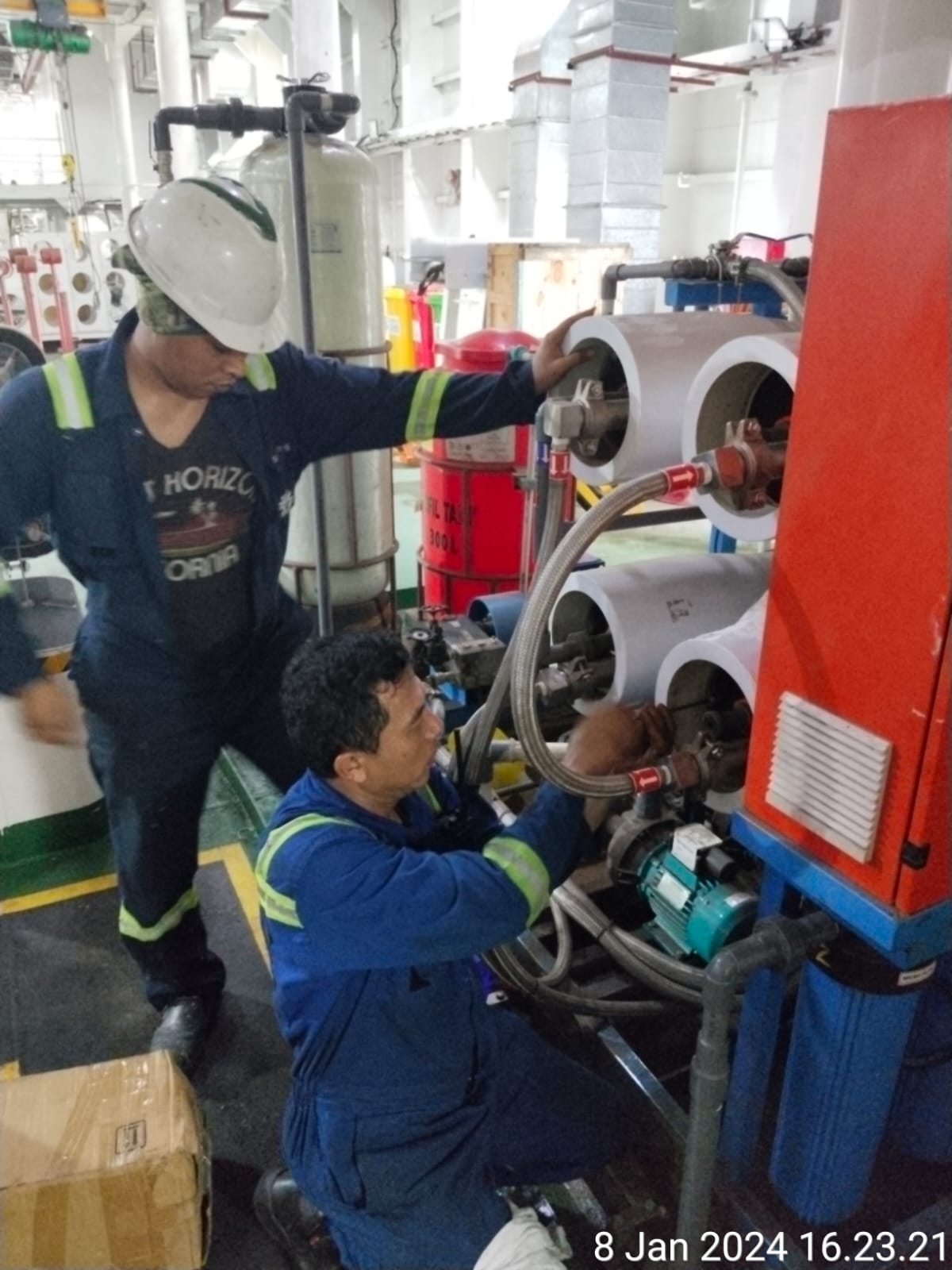
Peralatan SWRO desalinasi di atas kapal yang andal dan efisien yang dapat menghasilkan air bersih bersih dalam jumlah tak terbatas dari sumber air laut yang tersedia kini memungkinkan kemandirian air di laut.

Bagaimana Mesin SWRO Desalinasi Dapat Menguntungkan Pelaut dan Apa Saja Pilihan Utama yang Tersedia untuk Lingkungan Unik Ini?
Mesin SWRO Desalinasi untuk Kapal: Manfaat dan Pilihan untuk Memproduksi Air Bersih di KapalTerdapat peningkatan besar dalam permintaan sistem produksi air di kapal pesiar pribadi, kapal sewaan, kapal pesiar, dan kapal pelayaran lainnya selama dekade terakhir. Semakin banyak pelaut, pelaut, dan pelancong maritim yang mencari kemandirian, fleksibilitas, dan kemandirian dalam waktu yang mereka habiskan untuk hidup, berlibur, dan berlayar dengan memiliki kapasitas pembangkitan air bersih yang kuat dan tidak bergantung pada pasokan eksternal.

Bagaimana SWRO Desalinasi Dapat Menguntungkan Pelaut dan Apa Saja Pilihan Utama yang Tersedia untuk Lingkungan Unik Ini?
Pabrik Desalinasi untuk Kapal: Manfaat dan Pilihan untuk Memproduksi Air Bersih di Kapal

Terdapat peningkatan besar dalam permintaan sistem produksi air di kapal pesiar pribadi, kapal sewaan, kapal pesiar, dan kapal pelayaran lainnya selama dekade terakhir. Semakin banyak pelaut, pelaut, dan pelancong maritim yang mencari kemandirian, fleksibilitas, dan kemandirian dalam waktu yang mereka habiskan untuk hidup, berlibur, dan berlayar dengan memiliki kapasitas pembangkitan air bersih yang kuat dan tidak bergantung pada pasokan eksternal.

Peralatan desalinasi di atas kapal yang andal dan efisien yang dapat menghasilkan air bersih bersih dalam jumlah tak terbatas dari sumber air laut yang tersedia kini memungkinkan kemandirian air di laut.

Alasan Utama Meningkatnya Minat terhadap Mesin SWRO Desalinasi Air Laut di Kapal Laut
Memungkinkan pemeliharaan standar hidup rutin di lepas pantai Memiliki air yang cukup di kapal agar semua orang bisa mandi air panas setiap hari, memasak makanan yang layak, mencuci piring dan mencuci, serta memenuhi kebutuhan kebersihan memungkinkan awak dan penumpang maritim untuk menjunjung standar hidup biasa bahkan ketika berlabuh dari jarak jauh selama berminggu-minggu.
Cegah seringnya kembali ke pelabuhan untuk mendapatkan air bersih
Produksi di atas kapal mengurangi biaya perjalanan kembali ke marina atau dermaga yang mahal dan membebani lingkungan hanya untuk menyimpan tangki air bersih setiap kali persediaannya hampir habis.
Keamanan air jika terjadi keadaan darurat atau kegagalan peralatan Pabrik desalinasi internal menyediakan cadangan cadangan air tawar yang tidak terpengaruh oleh kontaminasi, kerusakan tangki penyimpanan, atau kegagalan peralatan yang ada dengan mengandalkan penyediaan.
Kelestarian lingkungan yang lebih baik Menghasilkan air sesuai permintaan menghilangkan limbah botol air plastik dan emisi dari pengangkutan simpanan air dalam jarak yang jauh agar kapal tetap mendapat pasokan air.
Kontrol atas kualitas air dan mineralisasi Kewenangan penuh atas kemurnian air, penyaringan dan profil mineralisasi daripada mengandalkan sumber air kota yang tidak konsisten dari berbagai pelabuhan di seluruh dunia.

Analisis Desalinasi Reverse Osmosis untuk Kapal Laut Kecil
Reverse osmosis mendominasi pasar desalinasi laut skala kecil dan menengah. Pompa diafragma elektrik memberi tekanan pada air laut yang telah disaring hingga 800–1.200 PSI, kemudian membran RO khusus menyaring garam terlarut, partikel, dan mikroorganisme sekaligus memungkinkan molekul air murni masuk ke saluran air tawar yang mengalir ke keran, pancuran, dan peralatan di pesawat.

Sistem SWRO (Ro Air Laut)menggunakan paduan dan membran tahan lama yang dirancang khusus untuk tahan terhadap kerasnya paparan terus-menerus terhadap air laut dengan tingkat salinitas lebih tinggi dan organisme pengotoran yang tidak ada di instalasi darat. Unit beroperasi 24/7 setiap kali kapal penjelajah melakukan perjalanan untuk memenuhi kebutuhan sehari-hari.

Kebutuhan listrik pada umumnya berkisar antara 50 hingga 200 watt untuk volume produksi yang berkisar antara 5 hingga 15+ galon per jam — cukup untuk kapten dan awak kapal layar, kapal pukat, kapal pesiar ekspedisi, dan kapal berukuran kecil hingga menengah lainnya. Pabrik RO umumnya kompak dan modular untuk memungkinkan penempatan fleksibel di ruang mesin yang sempit.

Manfaat selain air murni lepas pantai yang tidak terbatas mencakup biaya pemasangan yang wajar untuk kapal yang lebih kecil, perubahan sederhana pada sistem air yang ada, dan kapasitas yang dapat disesuaikan untuk berbagai ukuran dan aplikasi kapal.

Saat Merawat SWRO Onboard:

Pantau filtrasi untuk memerangi biofouling membran dan akumulasi kerak mineral yang akan sangat mengurangi umur fungsional jika dibiarkan.
Lakukan inspeksi dan pemeliharaan rutin sesuai pedoman pabrikan. Simpan suku cadang seperti filter dan membran di dalam pesawat untuk memungkinkan servis segera saat berlangsung.
Sesuaikan kadar mineral menggunakan kartrid remineralisasi karena air desalinasi kekurangan elektrolit alami yang penting untuk rasa dan nutrisi.
Catat jam pengoperasian dan riwayat servis untuk mengoptimalkan perencanaan pemeliharaan dan penyimpanan suku cadang.

Dasar-dasar Proses Distilasi
Distilasi meniru siklus air alami, menguapkan air asin lalu mengkondensasi ulang uapnya untuk menghasilkan air tawar murni yang bebas dari hampir semua kotoran. Pabrik distilasi termal di dalam kapal mencapai skala yang jauh lebih besar daripada pendidihan dasar, namun beroperasi dengan prinsip dasar perubahan fasa yang sama.

Pabrik distilasi kilat multi-tahap (MSF) dengan cepat merebus ruang-ruang air umpan asin yang telah diolah sebelumnya. Mendaur ulang panas laten dari kondensasi uap secara signifikan mengurangi kebutuhan energi. Tekanan harus memungkinkan air menguap dengan cepat ketika dipindahkan ke bejana yang berdekatan. Jika tidak, akumulasi kerak akan mengurangi efisiensi seiring berjalannya waktu.

Distilasi multi-efek (MED) mengalirkan air keluaran hangat dari flash evaporasi awal secara berurutan ke tahap efek berikutnya tanpa pemanasan ulang secara eksternal untuk meminimalkan beban termal. Setiap tahap cascading pada dasarnya memanfaatkan limbah panas. Efek tambahan secara eksponensial meningkatkan perolehan tetapi memerlukan desain kompresi uap yang cermat.

Distilasi MSF dan MED menghilangkan 99%+ garam, mikroba, dan mineral karena air yang menguap meninggalkan hampir semua kontaminan terlarut, tersuspensi, dan biologis saat diubah menjadi uap. Outputnya termineralisasi sebelum didistribusikan untuk mendapatkan rasa dan nutrisi.

Di Superyachts, pembangkit listrik tenaga panas ini menghasilkan 20.000+ liter air minum setiap hari menggunakan panas mesin limbah gratis. Kapasitas produksi di atas kapal yang begitu besar memungkinkan kapal menghabiskan waktu berbulan-bulan untuk terus ditempatkan di laut.

Saat mengevaluasi opsi, SWRO cocok untuk kapal kecil yang memproduksi 5–25 GPH sedangkan distilasi flash yang dioptimalkan atau teknologi distilasi multi-efek menjadi penting bagi kapal laut swasta dan komersial terbesar yang menuntut volume air hingga ribuan galon setiap hari.

jumlah orang, rata-rata penggunaan air tawar, durasi antara peluang pengisian, kemampuan sistem tenaga, dan anggaran Anda. Kebutuhan air di dalam kapal bervariasi dari 5–15 galon setiap hari untuk kapal penjelajah minimalis hingga ribuan untuk kapal penumpang. Pembuat air laut bersifat modular sehingga memungkinkan penyesuaian ukuran kapasitas sesuai kebutuhan aktual Anda. Pertimbangkan kebutuhan rata-rata dan puncak, rencanakan margin keamanan juga untuk fleksibilitas.

Berapa biaya sistem pembuat air laut?

Biaya di muka untuk pembuat air dengan perahu berkisar dari $2.000 unit darurat portabel hingga ratusan ribu untuk pabrik penyulingan kilat besar-besaran di kapal komersial yang memproduksi lebih dari 50.000 galon air tawar setiap hari. Namun sebagian besar kapal penjelajah memilih sistem osmosis balik kompak all-in-one yang berharga antara $4.000–15.000. Sistem RO yang dibangun dengan andal menghemat uang selama bertahun-tahun dalam pembelian air di dermaga yang mahal, serta memberikan keamanan dan kenyamanan yang meningkatkan gaya hidup berlayar secara signifikan meskipun terjadi guncangan pada awal.

Seberapa rumitkah pengoperasian dan pemeliharaan unit-unit ini?

Pembuat air laut berkualitas yang dirancang khusus untuk menghadapi kerasnya kehidupan lepas pantai umumnya mengintegrasikan operasi otomatis dan kemampuan pembilasan mandiri yang memerlukan sedikit pekerjaan langsung. Beberapa perawatan dasar seperti penggantian filter berkala, pembersihan membran, dan pemecahan masalah alarm peringatan atau penurunan volume produksi membuat sistem berjalan lancar selama bertahun-tahun. Kebanyakan pelaut melaporkan hanya menambahkan beberapa menit inspeksi setiap minggunya seiring dengan jadwal pemeliharaan kapal yang sudah sibuk. Mengikuti pedoman pabrikan tentang pemeliharaan membantu mengoptimalkan masa pakai dan keluaran.

Faktor apa saja yang memengaruhi kinerja dan masa pakai?

Permasalahan utama yang mengurangi keluaran dan masa pakai membran pada pabrik desalinasi kapal meliputi penumpukan organisme biofouling, akumulasi kerak mineral, air umpan masuk yang keruh, pembersihan/pemeliharaan yang tidak teratur, tekanan pompa yang rendah akibat segel yang aus, dan prosedur penyimpanan yang tidak tepat. Pemantauan yang cermat, pemeliharaan preventif, dan penggunaan senyawa yang tepat untuk pembersihan membran mengatasi sebagian besar faktor sebelum menyebabkan pengurangan permanen dalam kapasitas produksi pabrik selama bertahun-tahun digunakan di lepas pantai.

Seberapa andalkah sistem ini dalam menghasilkan air setiap hari?

Jika ukurannya sesuai dengan kebutuhan kapal Anda dan dirawat melalui prosedur pengoperasian dan pemeliharaan yang direkomendasikan pabrik, pembuat air laut terbukti sangat andal. Sistem yang dirancang dengan baik tahan terhadap gerakan, getaran, kelembapan, dan udara asin. Konstruksi modular memungkinkan penggantian komponen kecil jika terjadi kesalahan alih-alih kehilangan seluruh produksi. Pelaut yang berhati-hati memasang saringan laut terpisah, pompa cadangan atau efek penyulingan ditambah suku cadang yang memadai untuk memastikan air tetap tersedia bahkan jauh dari pelabuhan.

Apakah semua pembuat air menghasilkan kualitas air yang sama?

Terdapat beberapa variasi antara teknologi dan model tertentu — meskipun hampir semua air umpan desalinasi dengan kadar garam >35.000 PPM hingga <500 PPM dianggap dapat diminum. Air RO awalnya sangat murni tetapi kekurangan mineral sehingga memerlukan penyaringan remineralisasi sebelum dikonsumsi. Distilasi menambah panas dari uap yang diuapkan sehingga memerlukan pendinginan sebelum didistribusikan. Dalam kedua teknologi tersebut, pemantauan TDS secara berkala memastikan unit secara konsisten menghasilkan air yang aman dan berkualitas untuk kebutuhan kru yang sedang berjalan.

Faktor apa yang harus saya bandingkan antara model atau produsen?

Saat memilih di antara berbagai sistem pembuat air perahu yang tersedia, faktor utama yang perlu dipertimbangkan mencakup siklus kerja yang dirancang sesuai rencana Anda, bahan konstruksi yang tahan terhadap lingkungan laut, efisiensi energi, tingkat kebisingan, kemudahan perawatan, kemampuan otomatisasi, kapasitas pemurnian yang sesuai dengan kebutuhan air sebenarnya dan biaya. Selain itu, pertimbangkan persyaratan pemasangan, reputasi pabrikan, dan program garansi keseluruhan.

Setelah terinstal, perubahan apa yang perlu saya lakukan terhadap cara saya beroperasi atau tinggal di Kapl?

Pembuat air berkualitas berintegrasi dengan lancar ke perahu yang dirancang dengan baik dengan sedikit perubahan operasional. Penambahan sederhana seperti memeriksa filter secara berkala, memeriksa jalur kebocoran, membersihkan membran, beralih antara mode air di kapal atau membaca alat pengukur diagnostik sudah terintegrasi dengan mudah ke dalam rutinitas perawatan mingguan sebagian besar pelaut. Selain kemudahan berlabuh di perairan murni tanpa batas, gaya hidup di dalam kapal hanya mengalami sedikit perubahan meskipun mendapat manfaat dari cakrawala yang luas berkat penggelaran sistem pembuat air laut cerdas dengan ukuran yang tepat.


SWRO Desalinasi Sistem Untuk Air Laut yang Direkayasa Khusus – Untuk Pemurnian Air, Militer, Tahan Tekanan, Dalam Kontainer, dan Lainnya


REVERSE OSMOSIS

WATTECH SYSTEM INDONESIA

Sistem SWRO Desalinasi Air Laut yang Direkayasa Khusus – Penghemat Energi, Militer, Tahan Tekanan, Dalam Kontainer, dan Lainnya

Sea Water RO Containers sea water ro

Pengalaman Wattech Membranes melampaui sistem desalinasi air laut standar. Kami telah memasok sistem SWRO desalinasi air laut lengkap dengan Peghemat Energi, Pencatatan Data, Sistem Kontainer, Sistem Tahan Tekanan dan Korosi, Sistem Portabel untuk Operasi Militer, dan masih banyak lagi hingga jutaan liter  per hari.

WATTECH menyambut baik kesempatan untuk bekerja sama dengan Anda guna memenuhi kebutuhan filtrasi spesifik Anda.

Manfaat

Direkayasa Khusus agar sesuai dengan kebutuhan aplikasi spesifik Anda
Pengalaman lebih dari 20 tahun tercermin dalam kualitas kamiDirekayasa secara konservatif untuk kinerja jangka panjang yang andal
Diuji di pabrik untuk memastikan pengoperasian bebas masalah
Bingkai berlapis bubuk tugas berat
Komponen yang terbukti digunakan di seluruh sistem
Pemulihan energi tersedia
Operasi Terkendali PLC dan/atau Mikroprosesor

Details

Energy Recovery

  • Sistem pemulihan energi Membran Wattech memulihkan energi dari aliran limbah sistem osmosis balik air laut (SWRO) dengan efisiensi hingga 98%.
  • Pemulihan energi biasanya akan menghasilkan penghematan energi dan khususnya masuk akal secara ekonomi di wilayah dimana biaya listrik tinggi.
    Pompa tekanan tinggi utama berukuran hanya pada aliran permeat daripada aliran masuk membran penuh sehingga memungkinkan penghematan energi hampir 50% dibandingkan 20-35% dari pabrikan lain.
Energy Recovery to Improve Seawater Desalination System Efficiency
Pencatatan Data dan Pemantauan Jarak Jauh SWRO

  • Pencatatan data dengan tren dan laporan data real-time dan historis untuk menyederhanakan pemantauan dan pelaporan kinerja SWRO
  • Pemantauan jarak jauh melalui Internet dikonfigurasi untuk menampilkan informasi sistem waktu nyata untuk pemantauan dan kendali jarak jauh
  • Pemberitahuan alarm untuk menghubungi personel operasi melalui ponsel atau SMS.
Sistem dalam Kontainer

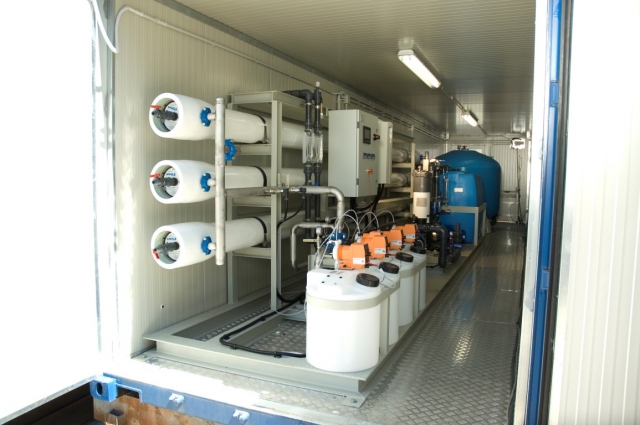
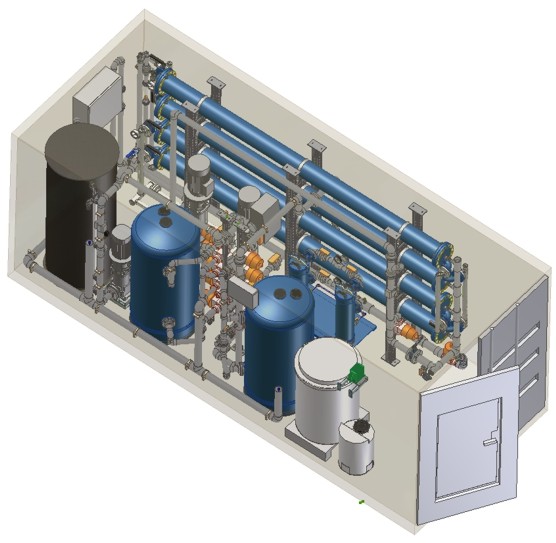
  • Semua Peralatan Dipasang dalam Kontainer ISO 20′ atau 40′ dengan pintu kargo ganda di salah satu ujungnya dan pintu pria di sisi panjangnya.
  • Bagian luar dicat epoksi. Pencahayaan interior, lantai, dan pemanas insulasi opsional serta AC.
Sistem Bukti Tahan Ledakan

  • Motor dan instrumentasi tipe tahan ledakan.
  • Penutup panel instrumen dan tegangan tinggi dengan pembersih udara.

Fitur

  • Tabung Tekanan Air Laut FRP
  • Heavy duty powder coated frame
  • 316 Stainless Steel Pressure Gauges
  • 316 Stainless Steel Low and High Pressure Switches
  • 316 Stainless Steel Back Pressure Regulator
  • Stainless Steel High Pressure Pumps
  • PLC and/or Microprocessor controlled operation
  • Conservatively engineered for reliable, long term performance
  • Factory tested to ensure trouble-free operation

Aplikasi

Aplikasi untuk Pabrik Desalinasi Air Laut Kustom  SWRO

  • Municipal Water Treatment
  • Hotels
  • Resorts
  • Military
  • Off-Shore Platforms
  • Large Marine Vessels
  • Various Industrial Applications


SWRO Indonesia Desalinasi Air Laut dengan Recovery Energy hingga 1000 m3 / d WRO – SW Reverse Osmosis RO Sea Water System


Sea Water Desalination SWRO Indonesia up to 6,9 m3/day. Series WRO-SW1.

Desalinasi SWRO Indinesia RO Air Laut hingga 6,9 m3 / hari. Seri WRO-SW1.

Sea Water Reverse OsmosisHigh_Container_901_UK-tekst

 Reverse Osmosis System The Best In Indonesia 

UTILITY

Removal of the total dissolved solids from sea water for high quality water production.

COMMON APPLICATIONS

  • Water production for domestic, industrial, hotel use, …
  • General uses and potable water production using sea water.
  • Feed water for boilers and cooling towers.

ADVANTAGES

The excellent design and the carefully selected construction materials, ensure:

  • Unobstructed-smooth operation
  • Νο interruptions for frequent chemical cleanings.
  • Fully automated operation.
  • Μinimum personnel occupation.
  • Long life-high efficiency of the membranes.
  • High safety degree, early notice of possible malfunctions, excellent system protection.
  • Low operational cost.
  • Excellent product water quality.
  • Sea Water Desalination 10,5 – 33,6 m3/day. Series WRO SW 2.


UTILITY

Removal of the total dissolved solids from sea water for high quality water production.

COMMON APPLICATIONS

  • Water production for domestic, industrial, hotel use, …
  • General uses and potable water production using sea water.
  • Feed water for boilers and cooling towers.

ADVANTAGES

The excellent design and the carefully selected construction materials, ensure:

  • Unobstructed-smooth operation
  • Νο interruptions for frequent chemical cleanings.
  • Fully automated operation
  • Μinimum personnel occupation.
  • Long life-high efficiency of the membranes.
  • High safety degree, early notice of possible malfunctions, excellent system protection.
  • Low operational cost.
  • Excellent product water quality.

Sea Water Desalination SWRO Indonesia 10,5 – 33,6 m3/day. Series WRO-SW2.

Desalinasi SWRO  Indonesia RO Air laut 10,5 – 33,6 m3 / hari. Seri WRO-SW2.

UTILITY

Removal of the total dissolved solids from sea water for high quality water production.

COMMON APPLICATIONS

  • Water production for domestic, industrial, hotel use, …
  • General uses and potable water production using sea water.
  • Feed water for boilers and cooling towers.

ADVANTAGES

The excellent design and the carefully selected construction materials, ensure:

  • Unobstructed-smooth operation
  • Νο interruptions for frequent chemical cleanings.
  • Fully automated operation
  • Μinimum personnel occupation.
  • Long life-high efficiency of the membranes.
  • High safety degree, early notice of possible malfunctions, excellent system protection.
  • Low operational cost.
  • Excellent product water quality.

Sea Water Desalination SWRO Indonesia 38,4 – 316,8 m3/day. Series WRO-SW3.

Desalinasi SWRO Indonesia RO Air Laut 38,4 – 316,8 m3 / hari. Seri WRO-SW3.

UTILITY

Removal of the total dissolved solids from sea water for high quality water production.

COMMON APPLICATIONS

  • Water production for domestic, industrial, hotel use, …
  • General uses and potable water production using sea water.
  • Feed water for boilers and cooling towers.

ADVANTAGES

The excellent design and the carefully selected construction materials, ensure:

  • Unobstructed-smooth operation.
  • Νο interruptions for frequent chemical cleanings.
  • Fully automated operation.
  • Μinimum personnel occupation.
  • Long life-high efficiency of the membranes.
  • High safety degree, early notice of possible malfunctions, excellent system protection.
  • Low operational cost.
  • Excellent product water quality.


Sea Water Desalination SWRO with Energy Recovery up to 1000 m3/d

Desalinasi SWRO Indonesia RO Air Laut dengan Recovery Energy hingga 1000 m3 / d


INTRODUCTION

Sea water desalination utilizes a lot of energy due to the very large high pressure pump required to drive the water with high concentration of salts through the membranes. A solution to reduce overall energy consumption of the system and essentialy reduce the cost of the produced water, by almost 50%, are Energy Recovery Systems. WATTECH has excellent experience in energy recovery systems due to the requirement for sea water desalination in Greece, Gulf and Middle East.

Wattech  offers solutions with two types of Energy Recovery Systems

  • HP – Hydraulic pressure booster recovery system (low energy consumption)
  • PX – Pressure Exchanger System (extra low energy consumption)

UTILITY

Removal of the total dissolved solids from sea water for high quality water production and reduced energy consumption.

COMMON APPLICATIONS

  • Water production for domestic, industrial, hotel use, …
  • General uses and potable water production using water.
  • Feed water for boilers and cooling towers.

ENVIRONMENTALLY FRIENDLY

All systems with energy recovery, greatly reduce the energy wasted, protecting the environment.

ADVANTAGES

The excellent design and the carefully selected construction materials, ensure:

  • Low operational cost.
  • Unobstructed-smooth operation.
  • Νο interruptions for frequent chemical cleanings.
  • Fully automated operation.
  • Μinimum personnel occupation.
  • Long life-high efficiency of the membranes.
  • High safety degree, early notice of possible malfunctions, excellent system protection.
  • Excellent product water quality.

The low energy consumption at the high pressure stage is obtained by a high performance energy recovery system.Turn key containerized systems  are available on request.

 Reverse Osmosis System The Best In Indonesia

swro 2swro 3

Marine Sea Water Desalination SWRO

Wattech ro sea water untuk kapal boot, cotage, Dll

Pengolahan air laut kepulauan Desalinasi Reverse Osmosis RO Sea Water  Sistem

UTILITY

Removal of the total dissolved solids from sea water for fresh water production.

COMMON APPLICATIONS

  • Fresh production for yachts, cruisers, F/B, etc
  • General uses and potable water production from sea water

ADVANTAGES

The excellent design and the carefully selected construction materials, ensure:

  • Very low space requirments, due to compact design.
  • Unobstructed-smooth operation.
  • NO interruptions for frequent chemical cleanings.
  • Fully automated operation.
  • Minimum personnel occupation.
  • Long life-high efficiency of the membranes.
  • High safety degree, early notice of possible malfunctions, excellent system protection.
  • Low operational cost.
  • Excellent product water quality.

All systems are designed using 3-D modeller simulation in order to reduce the required space to the minimum

 Reverse Osmosis System The Best In Indonesia 

PENGANTAR
Desalinasi air laut menggunakan banyak energi karena pompa tekanan tinggi yang sangat besar diperlukan untuk mendorong air dengan konsentrasi tinggi garam melalui membran. Sebuah solusi untuk mengurangi konsumsi energi secara keseluruhan dari sistem dan pada dasarnya mengurangi biaya air yang dihasilkan, hampir 50%, adalah Energy Recovery Systems. WATTECH  memiliki pengalaman yang sangat baik dalam sistem pemulihan energi karena kebutuhan untuk desalinasi air laut di  Indonesia
WATTECH  menawarkan solusi dengan dua jenis Energy Recovery System
HP – tekanan hidrolik sistem pemulihan penguat (konsumsi energi yang rendah)
PX – Tekanan Exchanger System (konsumsi energi ekstra rendah)
UTILITY
Menghilangkan  total padatan terlarut dari air laut untuk produksi air berkualitas tinggi dan mengurangi konsumsi energi.
APLIKASI UMUM
produksi air untuk domestik, industri, hotel menggunakan, …
kegunaan umum dan produksi air minum menggunakan air.
Umpan air untuk boiler dan menara pendingin.
RAMAH LINGKUNGAN
Semua sistem pemulihan energi, sangat mengurangi energi yang terbuang, melindungi lingkungan.
KEUNTUNGAN
Desain yang sangat baik dan bahan konstruksi yang dipilih dengan Teliti, pastikan:
biaya operasional rendah.
Suara Halus saat mesin Beroperasi.
interupsi Νο untuk pembersihan Membran dengan chmical.
Sepenuhnya Ber opersi otomatis 
Μinimum personil untuk operasional
mesin tahan lama-efisiensi membran. keamanan tinggi, Monitoring dapat mendektesi saat mesin menglami kerusakan  , perlindungan sistem yang sangat baik.
Kwualitas air produk Sangat Baik
Konsumsi energi yang rendah pada tahap tekanan tinggi diperoleh dengan sistem pemulihan energi kinerja tinggi.
Mengubah sistem tersedia berdasarkan permintaan

Desalinasi  Air Laut 38,4 – 316,8 m3 / hari. Seri WRO SW
 
UTILITY
WRO SW
 
Penghapusan total padatan terlarut dari air laut untuk produksi air berkualitas tinggi.
 
APLIKASI UMUM
produksi air untuk domestik, industri, hotel menggunakan, …
kegunaan umum dan produksi air minum menggunakan air laut.
Umpan air untuk boiler dan menara pendingin.
 
KEUNTUNGAN
 
Desain yang sangat baik dan bahan konstruksi yang dipilih dengan hati-hati, pastikan:
Terhalang-halus operasi.
interupsi Νο untuk pembersihan kimia sering.
Sepenuhnya otomatis operasi.
Μinimum personil pendudukan.
Panjang tinggi hidup-efisiensi membran.
Gelar keamanan tinggi, pemberitahuan awal mungkin malfungsi, perlindungan sistem yang sangat baik.
biaya operasional rendah.
Baik kualitas air produk.

 Desalinasi Air Laut 10,5 – 33,6 m3 / hari. WRO-SW
Air laut Desalinasi Air Laut Desalinasi
UTILITY
Penghapusan total padatan terlarut dari air laut untuk produksi air berkualitas tinggi.
APLIKASI UMUM
produksi air untuk domestik, industri, hotel menggunakan, …
kegunaan umum dan produksi air minum menggunakan air laut.
Umpan air untuk boiler dan menara pendingin.
KEUNTUNGAN
Desain yang sangat baik dan bahan konstruksi yang dipilih dengan hati-hati, pastikan:
operasi terhalang-halus
interupsi Νο untuk pembersihan kimia sering.
operasi sepenuhnya otomatis
Μinimum personil pendudukan.
Panjang tinggi hidup-efisiensi membran.
Gelar keamanan tinggi, pemberitahuan awal mungkin malfungsi, perlindungan sistem yang sangat baik.
biaya operasional rendah.
Baik kualitas air produk.

Sea Water Desalination up to 6,9 m3/day. Series WRO – SW

UTILITY

Removal of the total dissolved solids from sea water for high quality water production.

COMMON APPLICATIONS

  • Water production for domestic, industrial, hotel use, …
  • General uses and potable water production using sea water.
  • Feed water for boilers and cooling towers.

ADVANTAGES

The excellent design and the carefully selected construction materials, ensure:

  • Unobstructed-smooth operation
  • Νο interruptions for frequent chemical cleanings.
  • Fully automated operation.
  • Μinimum personnel occupation.
  • Long life-high efficiency of the membranes.
  • High safety degree, early notice of possible malfunctions, excellent system protection.
  • Low operational cost.
  • Excellent product water quality.

Marine Sea Water Desalination

swro 3 swro 2UTILITY

Removal of the total dissolved solids from sea water for fresh water production.

COMMON APPLICATIONS

  • Fresh production for yachts, cruisers, F/B, etc
  • General uses and potable water production from sea water

ADVANTAGES

The excellent design and the carefully selected construction materials, ensure:

  • Very low space requirments, due to compact design.
  • Unobstructed-smooth operation.
  • NO interruptions for frequent chemical cleanings.
  • Fully automated operation.
  • Minimum personnel occupation.
  • Long life-high efficiency of the membranes.
  • High safety degree, early notice of possible malfunctions, excellent system protection.
  • Low operational cost.
  • Excellent product water quality.

All systems are designed using 3-D modeller simulation in order to reduce the required space to the minimum..

Wattech ro sea water untuk kapal boot, cotage, Dll

REVERSE OSMOSIS INDONESIA WATTECH WRO SW 2,5 H

REVERSE OSMOSIS INDONESIA WATTECH WRO SW 2,5 H


REVERSE OSMOSIS RO | INDONESIA WATTECH


WATTTECH PT TIRTA SUMBER MAKMUR INDONESIA Industrial Water builds custom Reverse Osmosis systems designed specifically for your industrial water treatment needs.

understanding Reverse Osmosis

Reverse Osmosis, commonly referred to as RO, is a process where you demineralize or deionize water by pushing it under pressure through a semi-permeable Reverse Osmosis Membrane.

Osmosis

To understand the purpose and process of Reverse Osmosis you must first understand the naturally occurring process of Osmosis.

Osmosis is a naturally occurring phenomenon and one of the most important processes in nature. It is a process where a weaker saline solution will tend to migrate to a strong saline solution. Examples of osmosis are when plant roots absorb water from the soil and our kidneys absorb water from our blood.

Below is a diagram which shows how osmosis works. A solution that is less concentrated will have a natural tendency to migrate to a solution with a higher concentration. For example, if you had a container full of water with a low salt concentration and another container full of water with a high salt concentration and they were separated by a semi-permeable membrane, then the water with the lower salt concentration would begin to migrate towards the water container with the higher salt concentration.Osmosis Diagram

A semi-permeable membrane is a membrane that will allow some atoms or molecules to pass but not others. A simple example is a screen door. It allows air molecules to pass through but not pests or anything larger than the holes in the screen door. Another example is Gore-tex clothing fabric that contains an extremely thin plastic film into which billions of small pores have been cut. The pores are big enough to let water vapor through, but small enough to prevent liquid water from passing.

Reverse Osmosis is the process of Osmosis in reverse. Whereas Osmosis occurs naturally without energy required, to reverse the process of osmosis you need to apply energy to the more saline solution. A reverse osmosis membrane is a semi-permeable membrane that allows the passage of water molecules but not the majority of dissolved salts, organics, bacteria and pyrogens. However, you need to ‘push’ the water through the reverse osmosis membrane by applying pressure that is greater than the naturally occurring osmotic pressure in order to desalinate (demineralize or deionize) water in the process, allowing pure water through while holding back a majority of contaminants.

Below is a diagram outlining the process of Reverse Osmosis. When pressure is applied to the concentrated solution, the water molecules are forced through the semi-permeable membrane and the contaminants are not allowed through.
Reverse Osmosis Diagram

memahami Reverse Osmosis

Reverse Osmosis, biasa disebut RO, adalah proses demineralisasi atau deionisasi air dengan mendorongnya di bawah tekanan melalui Membran Reverse Osmosis semi-permeabel.

Osmosa
Untuk memahami tujuan dan proses Reverse Osmosis Anda harus terlebih dahulu memahami proses Osmosis yang terjadi secara alami.

Osmosis adalah fenomena yang terjadi secara alami dan salah satu proses terpenting di alam. Ini adalah proses dimana larutan garam yang lebih lemah akan cenderung bermigrasi ke larutan garam yang kuat. Contoh osmosis adalah ketika akar tanaman menyerap air dari tanah dan ginjal kita menyerap air dari darah.

Di bawah ini adalah diagram yang menunjukkan cara kerja osmosis. Suatu larutan yang konsentrasinya lebih rendah akan mempunyai kecenderungan alami untuk bermigrasi ke larutan yang konsentrasinya lebih tinggi. Misalnya, jika Anda memiliki wadah berisi air dengan konsentrasi garam rendah dan wadah lain berisi air dengan konsentrasi garam tinggi dan dipisahkan oleh membran semipermeabel, maka air dengan konsentrasi garam lebih rendah

Membran semipermeabel adalah membran yang memungkinkan beberapa atom atau molekul lewat tetapi tidak untuk yang lain. Contoh sederhananya adalah pintu kasa. Hal ini memungkinkan molekul udara melewatinya tetapi tidak memungkinkan hama atau apa pun yang lebih besar dari lubang di pintu kasa. Contoh lainnya adalah kain pakaian Gore-tex yang mengandung lapisan plastik sangat tipis yang telah dipotong miliaran pori-pori kecilnya. Pori-porinya cukup besar untuk membiarkan uap air masuk, namun cukup kecil untuk mencegah lewatnya air cair.

Reverse Osmosis adalah proses Osmosis terbalik. Sedangkan Osmosis terjadi secara alami tanpa memerlukan energi, untuk membalikkan proses osmosis Anda perlu menggunakan energi ke larutan yang lebih asin. Membran reverse osmosis adalah membran semi-permeabel yang memungkinkan lewatnya molekul air tetapi tidak memungkinkan sebagian besar garam terlarut, bahan organik, bakteri, dan pirogen. Namun, Anda perlu ‘mendorong’ air melalui membran reverse osmosis dengan memberikan tekanan yang lebih besar dari tekanan osmotik alami untuk desalinasi (demineralisasi atau deionisasi) air di dalam air.

How does Reverse Osmosis work?

Reverse Osmosis works by using a high pressure pump to increase the pressure on the salt side of the RO and force the water across the semi-permeable RO membrane, leaving almost all (around 95% to 99%) of dissolved salts behind in the reject stream. The amount of pressure required depends on the salt concentration of the feed water. The more concentrated the feed water, the more pressure is required to overcome the osmotic pressure.

The desalinated water that is demineralized or deionized, is called permeate (or product) water. The water stream that carries the concentrated contaminants that did not pass through the RO membrane is called the reject (or concentrate) stream.RO Membrane Diagram

As the feed water enters the RO membrane under pressure (enough pressure to overcome osmotic pressure) the water molecules pass through the semi-permeable membrane and the salts and other contaminants are not allowed to pass and are discharged through the reject stream (also known as the concentrate or brine stream), which goes to drain or can be fed back into the feed water supply in some circumstances to be recycled through the RO system to save water. The water that makes it through the RO membrane is called permeate or product water and usually has around 95% to 99% of the dissolved salts removed from it.

It is important to understand that an RO system employs cross filtration rather than standard filtration where the contaminants are collected within the filter media. With cross filtration, the solution passes through the filter, or crosses the filter, with two outlets: the filtered water goes one way and the contaminated water goes another way. To avoid build up of contaminants, cross flow filtration allows water to sweep away contaminant build up and also allow enough turbulence to keep the membrane surface clean.

What will Reverse Osmosis remove from water?

Reverse Osmosis is capable of removing up to 99%+ of the dissolved salts (ions), particles, colloids, organics, bacteria and pyrogens from the feed water (although an RO system should not be relied upon to remove 100% of bacteria and viruses). An RO membrane rejects contaminants based on their size and charge. Any contaminant that has a molecular weight greater than 200 is likely rejected by a properly running RO system (for comparison a water molecule has a MW of 18). Likewise, the greater the ionic charge of the contaminant, the more likely it will be unable to pass through the RO membrane. For example, a sodium ion has only one charge (monovalent) and is not rejected by the RO membrane as well as calcium for example, which has two charges. Likewise, this is why an RO system does not remove gases such as CO2 very well because they are not highly ionized (charged) while in solution and have a very low molecular weight. Because an RO system does not remove gases, the permeate water can have a slightly lower than normal pH level depending on CO2 levels in the feed water as the CO2 is converted to carbonic acid.

Reverse Osmosis is very effective in treating brackish, surface and ground water for both large and small flows applications. Some examples of industries that use RO water include pharmaceutical, boiler feed water, food and beverage, metal finishing and semiconductor manufacturing to name a few.

Reverse Osmosis Performance & Design Calculations

There are a handful of calculations that are used to judge the performance of an RO system and also for design considerations. An RO system has instrumentation that displays quality, flow, pressure and sometimes other data like temperature or hours of operation. In order to accurately measure the performance of an RO system you need the following operation parameters at a minimum:

  1. Feed pressure
  2. Permeate pressure
  3. Concentrate pressure
  4. Feed conductivity
  5. Permeate conductivity
  6. Feed flow
  7. Permeate flow
  8. Temperature

Salt Rejection %

This equation tells you how effective the RO membranes are removing contaminants. It does not tell you how each individual membrane is performing, but rather how the system overall on average is performing. A well-designed RO system with properly functioning RO membranes will reject 95% to 99% of most feed water contaminants (that are of a certain size and charge). You can determine effective the RO membranes are removing contaminants by using the following equation:

Salt Rejection Calculation

The higher the salt rejection, the better the system is performing. A low salt rejection can mean that the membranes require cleaning or replacement.

Salt Passage %

This is simply the inverse of salt rejection described in the previous equation. This is the amount of salts expressed as a percentage that are passing through the RO system. The lower the salt passage, the better the system is performing. A high salt passage can mean that the membranes require cleaning or replacement.

Salt Passage Calculation

Recovery %

Percent Recovery is the amount of water that is being ‘recovered’ as good permeate water. Another way to think of Percent Recovery is the amount of water that is not sent to drain as concentrate, but rather collected as permeate or product water. The higher the recovery % means that you are sending less water to drain as concentrate and saving more permeate water. However, if the recovery % is too high for the RO design then it can lead to larger problems due to scaling and fouling. The % Recovery for an RO system is established with the help of design software taking into consideration numerous factors such as feed water chemistry and RO pre-treatment before the RO system. Therefore, the proper % Recovery at which an RO should operate at depends on what it was designed for. By calculating the % Recovery you can quickly determine if the system is operating outside of the intended design. The calculation for % Recovery is below:

Recovery Calculation

For example, if the recovery rate is 75% then this means that for every 100 gallons of feed water that enter the RO system, you are recovering 75 gallons as usable permeate water and 25 gallons are going to drain as concentrate. Industrial RO systems typically run anywhere from 50% to 85% recovery depending the feed water characteristics and other design considerations.↑

Concentration Factor

The concentration factor is related to the RO system recovery and is an important equation for RO system design. The more water you recover as permeate (the higher the % recovery), the more concentrated salts and contaminants you collect in the concentrate stream. This can lead to higher potential for scaling on the surface of the RO membrane when the concentration factor is too high for the system design and feed water composition.

Concentration Factor Calculation

The concept is no different than that of a boiler or cooling tower. They both have purified water exiting the system (steam) and end up leaving a concentrated solution behind. As the degree of concentration increases, the solubility limits may be exceeded and precipitate on the surface of the equipment as scale.

For example, if your feed flow is 100 gpm and your permeate flow is 75 gpm, then the recovery is (75/100) x 100 = 75%. To find the concentration factor, the formula would be 1 ÷ (1-75%) = 4.

A concentration factor of 4 means that the water going to the concentrate stream will be 4 times more concentrated than the feed water is. If the feed water in this example was 500 ppm, then the concentrate stream would be 500 x 4 = 2,000 ppm.↑

Flux

Flux (Gfd) Calculation

For example, you have the following:
The RO system is producing 75 gallons per minute (gpm) of permeate. You have 3 RO vessels and each vessel holds 6 RO membranes. Therefore you have a total of 3 x 6 = 18 membranes. The type of membrane you have in the RO system is a Dow Filmtec BW30-365. This type of RO membrane (or element) has 365 square feet of surface area.

To find the flux (Gfd):

Flux Calculation Example

The flux is 16 Gfd.

This means that 16 gallons of water is passed through each square foot of each RO membrane per day. This number could be good or bad depending on the type of feed water chemistry and system design. Below is a general rule of thumb for flux ranges for different source waters and can be better determined with the help of RO design software. If you had used Dow Filmtec LE-440i RO membranes in the above example, then the flux would have been 14. So it is important to factor in what type of membrane is used and to try and keep the type of membrane consistent throughout the system.

Feed Water Source Gfd
Sewage Effluent 5-10
Sea Water 8-12
Brackish Surface Water 10-14
Brackish Well Water 14-18
RO Permeate Water 20-30

Mass Balance

A Mass Balance equation is used to help determine if your flow and quality instrumentation is reading properly or requires calibration. If your instrumentation is not reading correctly, then the performance data trending that you are collecting is useless.

You will need to collect the following data from an RO system to perform a Mass Balance calculation:

  1. Feed Flow (gpm)
  2. Permeate Flow (gpm)
  3. Concentrate Flow (gpm)
  4. Feed Conductivity (µS)
  5. Permeate Conductivity (µS)
  6. Concentrate Conductivity (µS)

The mass balance equation is:

(Feed flow1 x Feed Conductivity) = (Permeate Flow x Permeate Conductivity)
+ (Concentrate Flow*Concentrate Conductivity)1Feed Flow equals Permeate Flow + Concentrate Flow

For example, if you collected the following data from an RO system:

Permeate Flow 5 gpm
Feed Conductivity 500 µS
Permeate Conductivity 10 µS
Concentrate Flow 2 gpm
Concentrate Conductivity 1200 µS

Then the Mass Balance Equation would be:

(7 x 500) = (5 x 10) + (2*1200)

3,500 ≠ 2,450

Then find the difference

(Difference / Sum) ∗ 100

((3,500 – 2,450) / (3,500 + 2,450)) * 100

= 18%

A difference of +/- 5% is ok. A difference of +/- 5% to 10% is generally adequate. A difference of > +/- 10% is unacceptable and calibration of the RO instrumentation is required to ensure that you are collecting useful data. In the example above, the RO mass balance equation falls out of range and requires attention.

Understanding the difference between passes and stages in a Reverse Osmosis (RO) system

The term stage and pass are often mistaken for the same thing in an RO system and can be confusing termonology for an RO operator. It is important to understand the difffernce between a 1 and 2 stage RO and a 1 and 2 pass RO.

Difference between a 1 and 2 stage RO System

In a one stage RO system, the feed water enters the RO system as one stream and exits the RO as either concentrate or permeate water.

In a two-stage system the concentrate (or reject) from the first stage then becomes the feed water to the second stage. The permeate water is collected from the first stage is combined with permeate water from the second stage. Additional stages increase the recovery from the system.1 and 2 stage RO diagram

Array

In a Reverse Osmosis System an array describes the physical arrangement of the pressure vessels in a 2 stage system. Pressure vessels contain RO membranes (usually from 1 to 6 RO membranes are in a pressure vessel). Each stage can have a certain amount of pressure vessels with RO membranes. The reject of each stage then becomes the feed stream for the next successive stage. The 2 stage RO system displayed on the previous page is a 2:1 array which means that the concentrate (or reject) of the first 2 RO vessels is fed to the next 1 vessel.

RO System with Concentrate Recycle

With an RO system that can’t be properly staged and the feed water chemistry allows for it, a concentrate recycle setup can be utilized where a portion of the concentrate stream is fed back to the feed water to the first stage to help increase the system recovery.RO System with Concentrate Recycle Diagram

Single Pass RO vs Double Pass RO

Think of a pass as a stand alone RO system. With this in mind, the difference between a single pass RO system and a double pass RO system is that with a double pass RO, the permeate from the first pass becomes the feed water to the second pass (or second RO) which ends up producing a much higher quality permeate because it has essentially gone through two RO systems.

Besides producing a much higher quality permeate, a double pass system also allows the opportunity to remove carbon dioxide gas from the permeate by injecting caustic between the first and second pass. C02 is undesirable when you have mixed bed ion exchange resin beds after the RO. By adding caustic after the first pass, you increase the pH of the first pass permeate water and convert C02 to bicarbonate (HCO3-) and carbonate (CO3-2) for better rejection by the RO membranes in the second pass. This can’t be done with a single pass RO because injecting caustic and forming carbonate (CO3-2) in the presence of cations such as calcium will cause scaling of the RO membranes.
Single Pass RO and Double Pass RO diagram

RO Pretreatment

Proper pretreatment using both mechanical and chemical treatments is critical for an RO system to prevent fouling, scaling and costly premature RO membrane failure and frequent cleaning requirements. Below is a summary of common problems an RO system experiences due to lack of proper pretreatment.

Fouling

Fouling occurs when contaminants accumulate on the membrane surface effectively plugging the membrane. There are many contaminants in municipal feed water that are naked to the human eye and harmless for human consumption, but large enough to quickly foul (or plug) an RO system. Fouling typically occurs in the front end of an RO system and results in a higher pressure drop across the RO system and a lower permeate flow. This translates into higher operating costs and eventually the need to clean or replace the RO membranes. Fouling will take place eventually to some extent given the extremely fine pore size of an RO membrane no matter how effective your pretreatment and cleaning schedule is. However, by having proper pretreatment in place, you will minimize the need to address fouling related problems on a regular basis.

Fouling can be caused by the following:

  1. Particulate or colloidal mater (dirt, silt, clay, etc.)
  2. Organics (humic/fulvic acids, etc)
  3. Microorganisms (bacteria, etc). Bacteria present one of the most common fouling problems since RO membranes in use today cannot tolerate a disinfectant such as chlorine and thefore microorganisms are often able to thrive and multiply on the membrane surface. They may product biofilms that cover the membrane surface and result in heavy fouling.
  4. Breakthrough of filter media upstream of the RO unit. GAC carbon beds and softener beds may develop an under drain leak and if there is not adequate post filtration in place the media can foul the RO system.

By performing analytical tests, you can determine if the feed water to your RO has a high potential for fouling. To prevent fouling of an RO system, mechanical filtration methods are used. The most popular methods to prevent fouling are the use of multi-media filters (MMF) or microfiltration (MF). In some cases cartridge filtration will suffice.

Scaling

As certain dissolved (inorganic) compounds become more concentrated (remember discussion on concentration factor) then scaling can occur if these compounds exceed their solubility limits and precipitate on the membrane surface as scale. The results of scaling are a higher pressure drop across the system, higher salt passage (less salt rejection), low permeate flow and lower permeate water quality. An example of a common scale that tends to form on an RO membrane is calcium carbonate (CaCO3).

Chemical Attack

Modern thin film composite membranes are not tolerant to chlorine or chloramines. Oxidizers such as chlorine will ‘burn’ holes in the membrane pores and can cause irreparable damage. The result of chemical attack on an RO membrane is a higher permeate flow and a higher salt passage (poorer quality permeate water). This is why microorganism growth on RO membranes tends to foul RO membranes so easily since there is no biocide to prevent its growth.

Mechanical Damage

Part of the pretreatment scheme should be pre and post RO system plumbing and controls. If ‘hard starts’ occur mechanical damage to the membranes can occur. Likewise, if there is too much backpressure on the RO system then mechanical damage to the RO membranes can also occur. These can be addressed by using variable frequency drive motors to start high pressure pumps for RO systems and by installing check valve(s) and/or pressure relief valves to prevent excessive back pressure on the RO unit that can cause permanent membrane damage.

Pretreatment Solutions

Below are some pretreatment solutions for RO systems that can help minimize fouling, scaling and chemical attack.

Multi Media Filtration (MMF)

A Multi-Media Filter is used to help prevent fouling of an RO system. A Multi-Media Filter typically contains three layers of media consisting of anthracite coal, sand and garnet, with a supporting layer of gravel at the bottom. These are the medias of choice because of the differences in size and density. The larger (but lighter) anthracite coal will be on top and the heavier (but smaller) garnet will remain on the bottom. The filter media arrangement allows the largest dirt particles to be removed near the top of the media bed with the smaller dirt particles being retained deeper and deeper in the media. This allows the entire bed to act as a filter allowing much longer filter run times between backwash and more efficient particulate removal.

A well-operated Multi-Media Filter can remove particulates down to 15-20 microns. A Multi-Media Filter that uses a coagulant addition (which induces tiny particles to join together to form particles large enough to be filtered) can remove particulates down to 5-10 microns. To put this in perspective, the width of a human hair is around 50 microns.

A multi media filter is suggested when the Silt Density Index (SDI) value is greater than 3 or when the turbidity is greater than 0.2 NTU. There is no exact rule, but the above guidelines should be followed to prevent premature fouling of RO membranes.

It is important to have a 5 micron cartridge filter placed directly after the MMF unit in the event that the under drains of the MMF fail. This will prevent the MMF media from damaging downstream pumps and fouling the RO system.

Microfiltration (MF)

Microfiltration (MF) is effective in removing colloidal and bacteria matter and has a pore size of only 0.1-10µm. Microfiltration is helpful in reducing the fouling potential for an RO unit. Membrane configuration can vary between manufacturers, but the “hollow fiber” type is the most commonly used. Typically, the water is pumped from the outside of the fibers, and the clean water is collected from the inside of the fibers. Microfiltration membranes used in potable water applications usually operate in “dead-end” flow. In dead-end flow, all of the water fed to the membrane is filtered through the membrane. A filter cake that must be periodically backwashed from the membrane surface forms. Recovery rates are normally greater than 90 percent on feed water sources which have fairly high quality and low turbidity feeds.↑

Antiscalants and Scale Inhibitors

Antiscalants and scale inhibitors, as their name suggests, are chemicals that can be added to feed water before an RO unit to help reduce the scaling potential of the feed water. Antiscalants and scale inhibitors increase the solubility limits of troublesome inorganic compounds. By increasing the solubility limits, you are able to concentrate the salts further than otherwise would be possible and therefore achieve a higher recovery rate and run at a higher concentration factor. Antiscalants and scale inhibitors work by interfering with scale formation and crystal growth. The choice of antiscalant or scale inhibitor to use and the correct dosage depends on the feed water chemistry and RO system design.

Softening by ion exchange

A water softener can be used to help prevent scaling in an RO system by exchanging scale forming ions with non scale forming ions. As with a MMF unit, it is important to have a 5 micron cartridge filter placed directly after the water softener in the event that the under drains of the softener fail.

Sodium Bisulfite (SBS) injection

By adding sodium bisulfite (SBS or SMBS), which is a reducer, to the water stream before an RO at the proper dose you can remove residual chlorine.

Granular Activated Carbon (GAC)

GAC is used for both removing organic constituents and residual disinfectants (such as chlorine and chloramines) from water. GAC media is made from coal, nutshells or wood. Activated carbon removes residual chlorine and chloramines by a chemical reaction that involves a transfer of electrons from the surface of the GAC to the residual chlorine or chloramines. The chlorine or chloramines ends up as a chloride ion that is no longer an oxidizer.

The disadvantage of using a GAC before the RO unit is that the GAC will remove chlorine quickly at the very top of the GAC bed. This will leave the remainder of the GAC bed without any biocide to kill microorganisms. A GAC bed will absorb organics throughout the bed, which is potential food for bacteria, so eventually a GAC bed can become a breeding ground for bacteria growth which can pass easily to the RO membranes. Likewise, a GAC bed can produce very small carbon fines under some circumstances that have the potential to foul an RO.

The RO membranes are the heart of the RO system and certain data points need to be collected to determine the health of the RO membranes. These data points include the system pressures, flows, quality and temperature. Water temperature is directly proportional to pressure. As the water temperature decreases it becomes more viscous and the RO permeate flow will drop as it requires more pressure to push the water through the membrane. Likewise, when the water temperature increases the RO permeate flow will increase. As a result, performance data for an RO system must be normalized so that flow variations are not interpreted as abnormal when no problem exists. The normalized flows, pressures and salt rejection should be calculated, graphed and compared to the baseline data (when the RO was commissioned or after the membranes were cleaned or replaced) to help troubleshoot any problems and also determine when to clean or inspect the membranes for damage. Data normalization helps display the true performance of the RO membranes. As a general rule of thumb, when the normalized change is +/- 15% from the baseline data then you need to take action. If you don’t follow this rule then RO membrane cleanings may not be very effective at brining the membranes back to near new performance.

RO Membrane Cleaning

RO membranes will inevitably require periodic cleaning, anywhere from 1 to 4 times a year depending on the feed water quality. As a general rule, if the normalized pressure drop or the normalized salt passage has increased by 15%, then it is time to clean the RO membranes. If the normalized permeate flow has decreased by 15% then it is also time to clean the RO membranes. You can either clean the RO membranes in place or have them removed from the RO system and cleaned off site by a service company that specializes in this service. It has been proven that offsite membrane cleaning is more effective at providing a better cleaning than onsite cleaning skids.

RO membrane cleaning involves low and high pH cleaners to remove contaminants from the membrane. Scaling is addressed with low pH cleaners and organics, colloidal and biofouling are treated with a high pH cleaner. Cleaning RO membranes is not only about using the appropriate chemicals. There are many other factors involved such as flows, water temperature and quality, properly designed and sized cleaning skids and many other factors that an experienced service group must address in order to properly clean RO membranes.

Summary

Reverse Osmosis is an effective and proven technology to produce water that is suitable for many industrial applications that require demineralized or deionized water. Further post treatment after the RO system such as mixed bed deionization can increase the quality of the RO permeate and make it suitable for the most demanding applications. Proper pretreatment and monitoring of an RO system is crucial to preventing costly repairs and unscheduled maintenance. With the correct system design, maintenance program, and experienced service support, your RO system should provide many years of high purity water.



Reverse Osmosis RO Air Laut – SeaWater RO-SWRO


 REVERSE OSMOSIS  RO AIR LAUT  (SWRO) – SEAWATER RO WRO SW – 2,5

Pengolahan air asin menjadi air tawar (desalinasi) menggunakan teknologi membran Reverse Osmosis (SWRO) RO AIR LAUT atau Osmosis Balik

REVERSE OSMOSIS INDONESIA WATTECH WRO SW 2,5 H

REVERSE OSMOSIS INDONESIA  WATTECH WRO SW 2,5 H(RO AIR LAUT )

Teknologi pengolahan air asin dengan teknologi membran Reverse Osmosis Sea watter (RO Air Laut) atau Osmosis Balik banyak dipakai di banyak negara seperti Amerika, Jepang, Jerman dan Arab. Teknologi ini banyak dipakai untuk memasok kebutuhan air tawar bagi kota-kota tepi pantai yang langka sumber air tawarnya. Pemakai adalah kapal laut, industri farmasi, industri elektronika, dan rumah sakit. Tentu saja di Indonesia juga teknologi pengolahan air ini telah dipakai, bahkan oleh Kementrian Kelautan kita. Jika anda membutuhkan alat pengolahan air asin dengan teknologi membran Reverse Osmosis (RO AIR Laut  ) (Osmosis  Balik / Osmosis Terbalik) silahkan Hubungi kami

Movable-and-single-stage-reverse-osmosis-seawater.jpg_200x200 2009516821376619852581_aboutus_2 Wattech ro sea water untuk kapal boot, cotage, Dll

Keunggulan teknologi membran Reverse Osmosis  Sea Water (RO AIR LAUT ) Osmosa Balik / Osmosis Terbalik) adalah kecepatannya dalam memproduksi air, karena menggunakan tenaga pompa. Kelemahannya adalah penyumbatan pada selaput membran oleh bakteri dan kerak kapur atau fosfat yang umum terdapat dalam air asin atau laut. Untuk mengatasi kelemahannya tersebut, pada unit pengolah air Reverse Osmosis (RO AIR LAUT) atau osmosa balik (osmosis terbalik) selalu dilengkapi dengan unit anti pengerakkan dan anti penyumbatan oleh bakteri.

Pada proses desalinasi menggunakan membrane Reverse Osmosis (RO) atau Osmosa Balik (Osmosis Terbalik), air pada larutan garam (air asin) dipisahkan dari garam terlarutnya dengan mengalirkannya melalui membran water-permeable. Permeate dapat mengalir melalui membran akibat adanya perbedaan tekanan yang diciptakan antara air asin (umpan) bertekanan dan produk, yang memiliki tekanan dekat dengan tekanan atmosfer. Sisa umpan selanjutnya akan terus mengalir melalui sisi reaktor bertekanan sebagai brine. Proses ini tidak melalui tahap pemanasan ataupun perubahan fasa. Kebutuhan energi utama adalah untuk memberi tekanan pada air umpan. Desalinasi air payau membutuhkan tekanan operasi berkisar antara 250 hingga 400 psi, sedangkan desalinasi air laut memiliki kisaran tekanan operasi antara 800 hingga 1000 psi. Air hasil olahan desalinasi dengan teknologi membaran Reverse Osmosis (RO) atau Osmosa Balik ini sudah bebas dari bakteri dan dapat langsung diminum.

Untuk mengetahui lebih lengkap tentang pengolahan air dengan desalinasi menggunakan teknologi membran Reverse Osmosis atau Osmosa Balik, ikuti artikel kami selanjutnya, atau Hubungi kami untuk Pemesanan Sea Water RO (RO AIR LAUT )

SWRO KECIL WATTECH

SWRO KAPAL IKAN KECIL

 RO AIR LAUT { WATTECH }  SWRO INDONESIA  DI PT Tirta Sumber Makmu   Email  obed@tsm.or.id

Standard Equipment

Microprocessor/PLC Controller for Automatic Operation

  • Thin Film Composite Membranes
  • FRP Membrane Housings
  • Stainless Steel High Pressure Pump
  • Permeate Flow Meter
  • Low and High Pressure Shutoff Switches
  • Compact Aluminum Frame with Powder Coated Finish
  • Stainless Steel Back Pressure Control
  • 5 Micron Sediment Filter and Housing
  • Differential Gauge Showing Filter Life
  • High Pressure Relief Valve
  • Liquid Filled System Pressure Gauge
  • Product TDS with Digital Display Readout
  • Fresh Water Divert: Monitors Permeate Quality and diverts to drain if it falls below a pre-set set point
  • Booster Pump and Raw Water Strainer
  • Fresh Water Flush Module
  • Installation Kit
Monitors and/or Controls:

  • Booster Pump
  • Delayed start-up of high pressure pump
  • Low and high pressure switches
  • On/Off with storage tank level*
  • Permeate TDS with alarm set-point
  • Water Temperature
  • Operating Hours
  • Fresh water flush
  • Automatic product water diversion
  • Pretreatment lock-out

Controller Features:

  • Permeate Quality (TDS)
  • Water Temperature
  • Operating Hours
  • Operating Status
  • Alarm Condition
  • NEMA 4X Enclosure
  • Remote Control Operation(optional)

maritime_controller_1

I-ROC150S Controller

LED Display:

  • Backlit LED Display
  • Multi-function Keypad
  • Visual and Audible Alarm
  • Programmable Time Delays, Set-Points and Flush Modes
  • Visual Indicator Alarm Light
  • Low Pressure Automatic Restart

Mengkonversi air laut untuk air minum untuk kelangsungan penyediaan air tawar untuk digunakan onboard,
WATTECH  desain yang kompak membuatnya ideal untuk digunakan pada kapal pesiar, kapal, dan kapal pesiar
pemantauan terus menerus dari kualitas air produk menjamin pasokan air tawar tidak terkontaminasi dengan mengalihkan serapan jika kualitas jatuh di bawah titik pre-set
Mikroprosesor controller menyediakan operasi otomatis dan pemantauan
siram air tawar memperpanjang umur dari air laut RO Membrane Elements, dan memastikan kinerja sistem yang optimal
kondisi operasi mengukur display panel sistem kompak sekilas
Konservatif yang dirancang dengan komponen terbukti handal, kinerja jangka panjang
Pabrik diuji untuk memastikan bebas masalah operasi


Call Us
021- 88871689
Address
JL Ambasador III Blok A2 No 22-23 Pondok Ungu Sektor V Bekasi 17612
Site Search